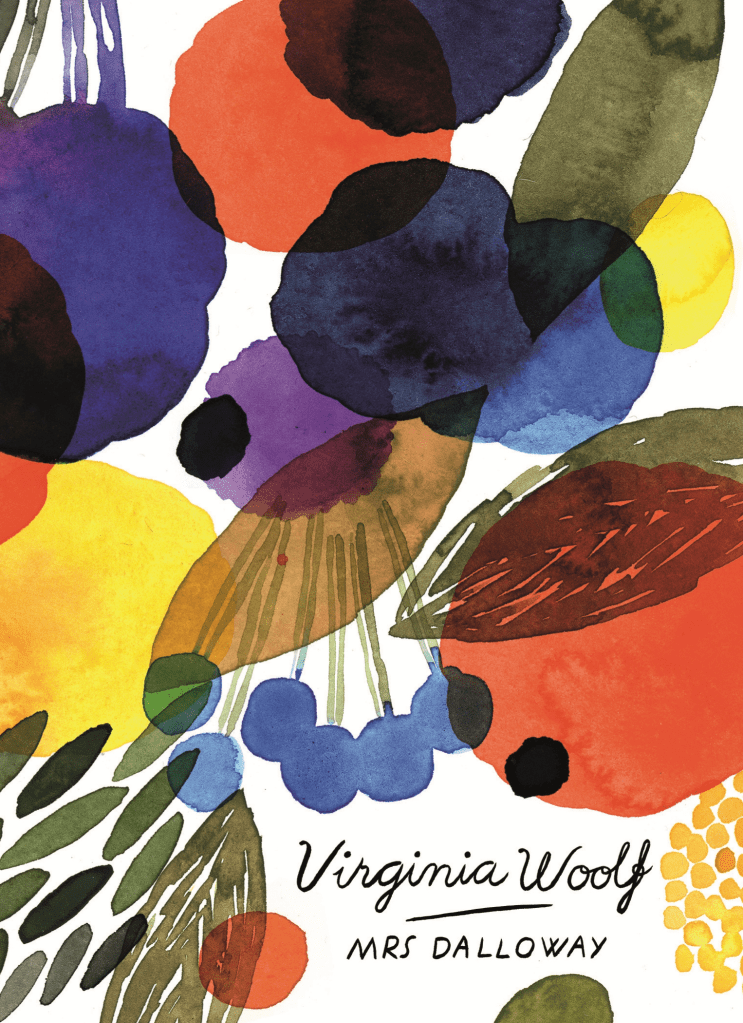
This book has received some hate.
It’s been called boring, uneventful, and difficult to follow.
And I would be lying if I said I had no idea where these remarks were coming from. I too made the mistake of diving in with every intention to devour a riveting novel, a classic, because it’s Virginia Woolf, right?
Not exactly.
MRS. DALLOWAY BOOK REVIEW
Written in stream of consciousness prose, Woolf’s Mrs. Dalloway refuses to abide by any kind of structured plot. (Just like our lives, no?) The pages follow Clarissa Dalloway, London’s high-society hostess, throughout the course of a single day as she prepares for one of her iconic parties. The perspective subtly shifts throughout the novel among various other characters that are connected to Mrs. Dalloway in some way. There are no chapters, no breaks, and no explicit switching between perspectives. It unapologetically, relentlessly flows on like water between various minds and how they interpret the world around them over the course of a single day. It’s of course centered around Mrs. Dalloway and her tasks in preparing to host one of her notorious London parties, but the people that surround her life are each given sufficient voice as well. The relentless flow of poetic prose about each of them contributes to what I found to be the sharp point of the entire work—that no matter what you do or where you go, you carry your own unique set of experiences with you, and they forever inform your perceptions of the world.
QUOTES AND ANALYSIS
“‘Do you remember the lake?’ she said, in an abrupt voice, under the pressure of an emotion which caught her heart, made the muscles of her throat stiff, and contracted her lips in a spasm as she said ‘lake.’
For she was a child, throwing bread to the ducks, between her parents, and at the same time a grown woman coming to her parents who stood by the lake, holding her life in her arms which, as she neared them grew larger and larger in her arms until it became a whole life, a complete life, which she put down by them and said, ‘This is what I have made of it! This!’ And what had she made of it?”
-Virginia Woolf Mrs. Dalloway
This is not a page turner. It won’t keep you up all night. In fact, after a dozen or so pages you will likely need to set it down simply because it obliterates and transcends the parameters that we have been conditioned to expect from a novel. But that’s a good thing. It begs you to return to it again and again, extracting new meanings with every read, like any great work of art should. In a very meta way, Woolf forces you to think with the mind of a writer in order to understand and appreciate what she is doing. That is to say, she challenges your mind to never stop, to never breathe, to always be working to extract deeper meanings out of seemingly small, mundane things. With that in mind, I quickly learned that this is a book that is meant to be savored like a rich desert. If you try to down half the book in one sitting, you will be dizzy and in various states of cognitive pain. But if you take it slowly, if you let each word linger in your mouth like a hard candy, I think you’ll understand the hype.
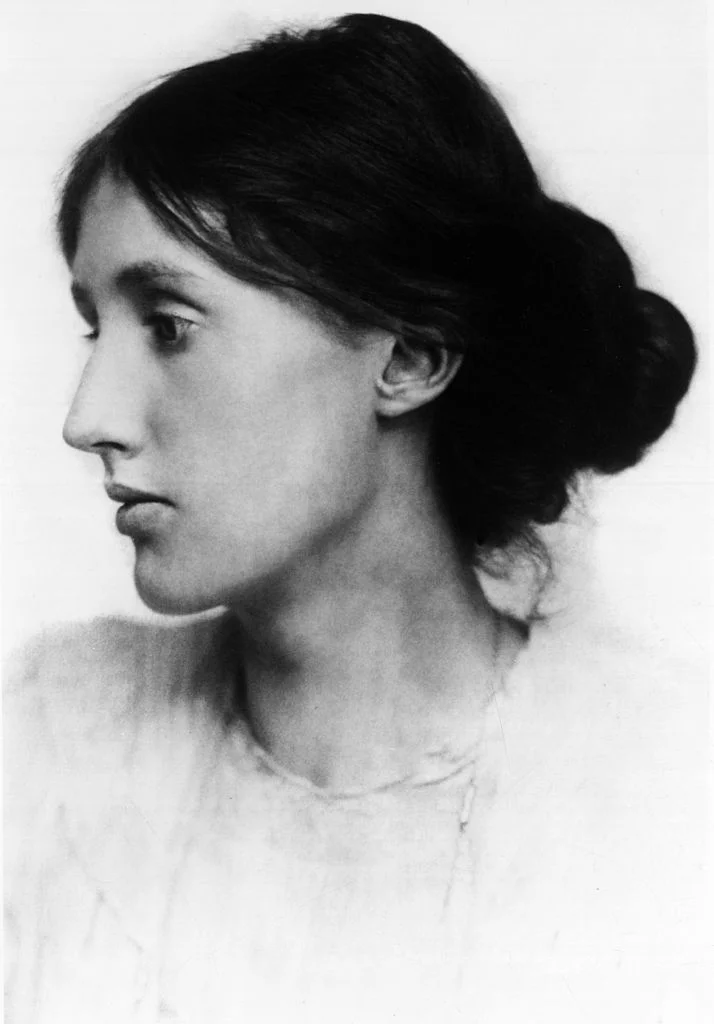
Because simply put, this novel is gorgeous. It’s rich and flavorful and meant to be savored. It bombards you with brilliant imagery and complex metaphors and you can never quite distinguish what is real, what is remembered, and what has been a dream. Throughout the novel, characters are constantly bombarded by memories of the past and of people they used to love and places they used to exist within. Just walking down the street to buy flowers triggers memories of a lost love, of war, of how the woman next door lost her sons in the war, of how changed the world feels after loss. And each thought stacks on top of the previous one in a stream of consciousness that beautifully resembles what it truly feels like to be a human being in the world. We are all walking around all of the time with machines in our heads that bombard us with apparitions of the past or dreams of the future. We are constantly seeing things that were once there, but are not there anymore.
“But she said, sitting on the bus going up Shaftesbury Avenue, she felt herself everywhere; not ‘here, here, here’; and she tapped the back of the seat; but everywhere…So that to know her, or any one, one must seek out the people who completed them; even the places.
the part of us which appears, are so momentary compared with the other, the unseen part of us, which spreads wide, the unseen might survive, be recovered somehow attached to this person or that, or even haunting certain places, after death. Perhaps – perhaps.”
-Virginia Woolf Mrs. Dalloway
There is also an isolation to each character’s experiences, where one is never remotely near to fully understanding the other, that painfully and somewhat cathartically exposes the isolation that I think we all feel as me move through the world. Our minds are so deeply complex, our experiences so varied and personal, that it is nearly impossible for anyone to understand us completely, even if we feel that they do.
For these reasons, I appreciate the art that is Mrs. Dalloway. But on a deeper level, I appreciate the work that Woolf did to authentically communicate what it feels like to be alive in the world. Because, yeah, it can be boring and uneventful and difficult to stick with at times. But its art. And we’re creating it all the time.
Join the fun
Give your inbox something to look forward to.
 SPiNNiNG ViSiONS
Leave a Reply